
Shared Virtual Card vs Joint Account: Managing Shared Expenses for Couples
The smarter way for couples to to manage shared expenses with more control, transparency, and flexibility
3 min read
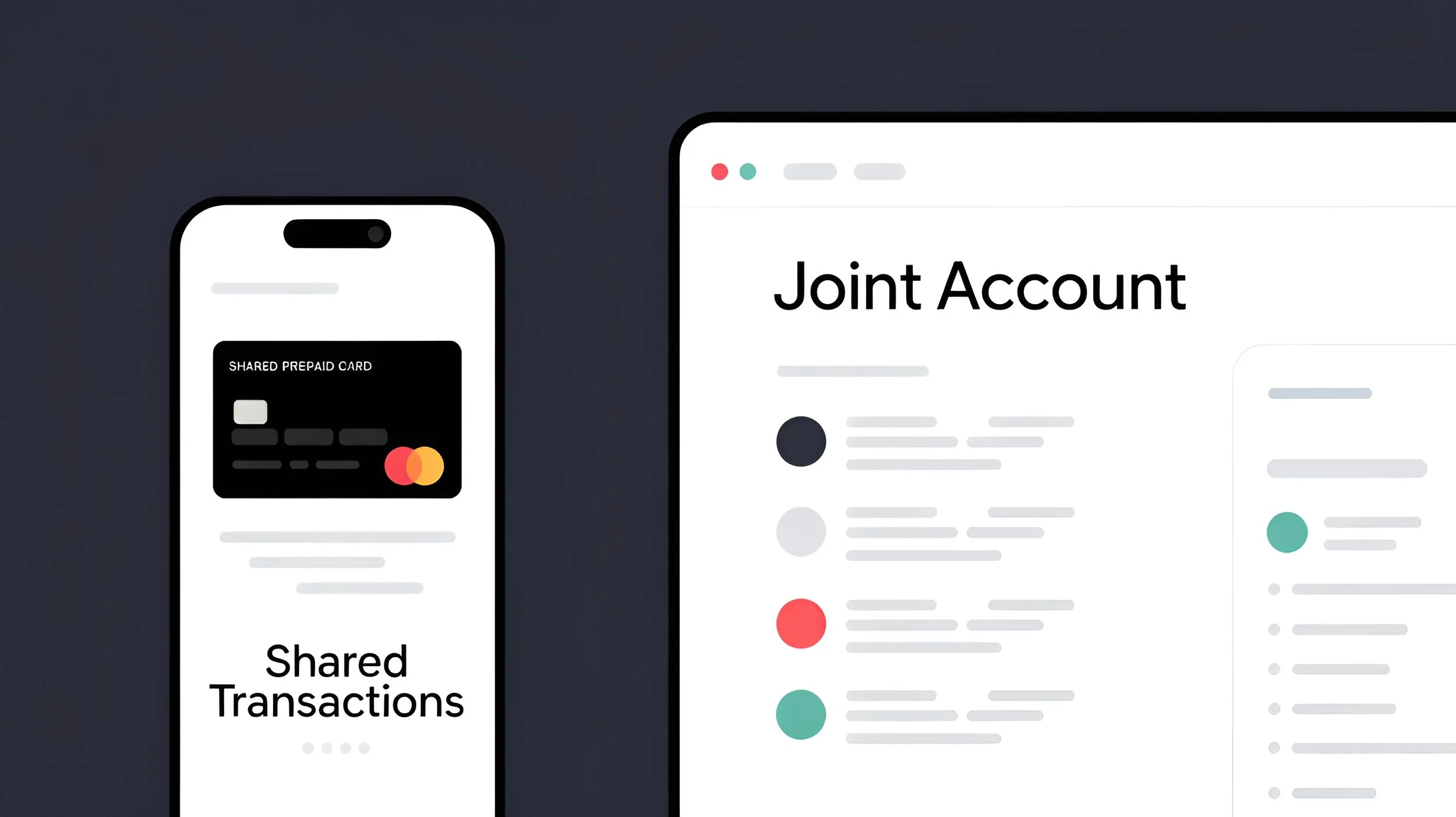
When deciding how to manage shared expenses while keeping some financial independence a shared virtual cards vs joint accounts comparison may help. In this short article we identify 7 important differences.
1. Financial Independence, Kept Intact
A joint account merges your finances — a big commitment that can blur individual boundaries. On the other hand, a shared virtual card, lets you contribute to shared expenses without surrendering control of your personal funds. You each decide how much to load, when, and for what purpose.
2. Simpler to Open and Manage
Joint accounts often come with paperwork, credit checks, and sometimes long approval times. However, in some cases the process can be sped up by opening it online. A shared virtual card, on the other hand, can be set up in minutes, directly from within the app, with no impact on your credit score. It’s low-commitment, high-convenience.
3. Transparent, Real-Time Tracking
With a shared virtual card, both users can see every transaction instantly — who paid for what, and when. Joint accounts may offer statements, but miss sometimes detailed personalised insights. The shared virtual model, like the one Partly proposes, provides detailed spending insights, making shared spending smart,visible and fair and avoids confusion or resentment.
4. Safer and More Controlled
Since it’s preloaded, the balance is limited to what you load — there’s no overdraft risk and no access to your main accounts. If the card is lost or compromised, exposure is minimal.
5. Easier to End or Adjust
Relationships and living arrangements change. Closing a joint bank account can become administrative (and emotional) chaos. Ending or pausing a shared virtual card, on the other hand, is quick and drama-free — simply stop topping it up.
6. Ideal for Temporary or Flexible Living
Whether it’s a new relationship or a short-term flatshare a shared virtual card fits naturally into modern, flexible lifestyles. No need to formalize your finances before you’re ready.
7. Each is in control
With a shared virtual card, like the one offered within the Partly app each is in control of accepting or declining a transaction, when it happens. With a joint account, you are informed after the transaction happens, when actually it’s actually too late.
In Short:
A joint account is about merging lives. A shared virtual card is about managing them — together, but independently.
It’s the elegant middle ground for a generation that values connection without losing autonomy.
A simpler alternative to joint accounts
Early access launching soon!
Frequently Asked Questions
-
A joint account combines funds in one bank account owned by both partners. A shared virtual card typically uses a separate balance that partners top up for shared expenses while keeping personal accounts separate.
-
It depends on how couples prefer to manage money. Some couples use joint accounts to combine finances fully, while others prefer shared virtual cards to manage shared expenses without merging personal finances.
-
Yes. Shared virtual cards can be commonly used for shared costs such as groceries, utilities, subscriptions, travel expenses, and everyday household spending.
-
No. Many couples manage shared expenses without a joint account by using systems that allow them to contribute money for shared spending while keeping personal finances separate.
-
Couples may use shared virtual cards with equal contributions, while others top up different amounts depending on income or personal agreements.
This article is for informational and lifestyle purposes only and does not constitute financial advice. Readers should consider their own financial situation and consult a professional if needed.